
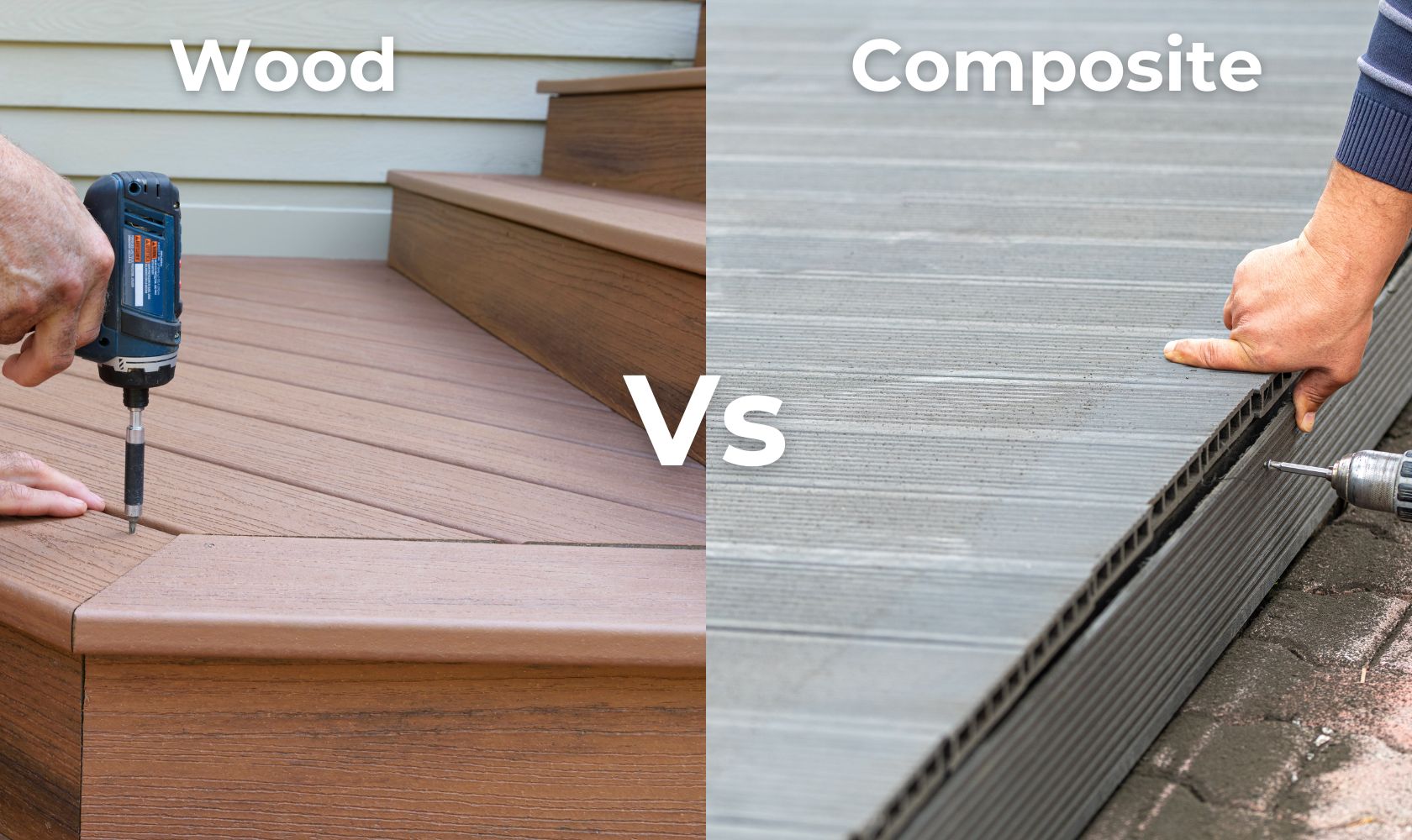
A deck is one of the best ways to add usable living space to your home. It is a place to relax, cook, and entertain, and a well-built one can also add to your home’s appeal. But before you start planning, there is one big decision to make: composite or wood?
Both materials can make a beautiful deck, and neither is the right answer for everyone. This guide compares composite and wood decking on cost, lifespan, maintenance, appearance, and performance in wet weather, so you can choose with confidence.
Quick Comparison
| Factor | Wood Decking | Composite Decking |
|---|---|---|
| Upfront cost | Lower | Higher |
| Maintenance | Regular sealing or staining | Occasional cleaning |
| Lifespan | Shorter, depends on care | Generally longer |
| Appearance | Natural, authentic grain | Wood-like, many colors |
| Moisture resistance | Needs protection | Highly resistant |
| Splinters | Possible over time | Rare |
| Repairs | Replace or sand boards | Replace damaged boards |
What Is Wood Decking?
Wood decking comes in several types, each with its own look and price:
- Pressure-treated lumber is the most budget-friendly choice. It is treated to resist rot and insects, but it needs regular sealing to stay in good shape.
- Cedar is naturally resistant to decay and has a warm, attractive color. It costs more than pressure-treated wood and still needs upkeep to keep its color.
- Redwood offers rich color and good natural resistance, though it is typically one of the pricier wood options.
- Tropical hardwoods are extremely dense and long lasting, but they are expensive and harder to work with.
Pros of Wood Decking
- Lower upfront cost, especially pressure-treated lumber
- Natural look and feel that many people love
- Can be stained or painted in different colors
- Easy to cut, shape, and repair
Cons of Wood Decking
- Needs regular cleaning, sealing, or staining
- Can crack, warp, splinter, or fade over time
- Vulnerable to moisture, rot, and insects if neglected
- Maintenance costs and time add up over the years
What Is Composite Decking?
Composite decking is made from a blend of wood fibers and plastic, or in some cases entirely from plastic. It is designed to look like wood without needing the same upkeep. Many products have a protective outer layer, called capping, that helps resist stains, fading, and moisture.
Pros of Composite Decking
- Very low maintenance, with no sanding, staining, or sealing
- Resistant to rot, insects, and moisture
- Fewer splinters, which is good for bare feet and kids
- Wide range of colors and wood-grain textures
- Often longer lasting than standard wood
Cons of Composite Decking
- Higher upfront cost
- Can get warm in direct sun, especially in darker colors
- Can still develop mold or mildew on the surface if debris builds up
- Does not look exactly like real wood to some people
- Cannot easily be refinished if you want a new color
Cost: Upfront vs. Long-Term
Wood usually wins on the price tag at the start. Pressure-treated lumber is the least expensive way to build a deck, while composite typically costs more per square foot.
But the full picture includes maintenance. A wood deck needs cleaning and sealing or staining every year or two, which means buying products or paying someone to do the work. Over ten or twenty years, those costs can narrow the gap. Composite costs more up front but asks for little beyond occasional washing.
When comparing prices, think about:
- Your budget today and how much you can spend on the build
- Your time and willingness to maintain the deck
- How long you plan to stay in the home
- Long-term costs of staining, repairs, and replacing boards
A contractor can give you written pricing for both materials so you can compare actual numbers for your deck rather than averages.
Durability in Wet Weather
If you live somewhere with heavy rain and damp winters, moisture should be a major part of your decision.
Wood can absorb water, which leads to swelling, warping, and eventually rot if the deck is not maintained. Shaded decks that stay damp are especially at risk, and moss or algae can make boards slippery.
Composite resists water absorption much better, so it tends to hold up well in rainy conditions. Surface mildew can still appear in shaded, damp spots, but it is usually easy to clean.
For rainy climates, composite is often a strong choice. That said, a well-built, well-maintained wood deck can last for many years, especially with good drainage and ventilation underneath.
Maintenance: What to Expect
Wood Deck Maintenance
- Wash the deck once or twice a year
- Re-seal or re-stain every one to three years, depending on the product and exposure
- Check for loose boards, popped nails, and rotting wood
- Keep leaves and debris off the surface and out of the gaps
Composite Deck Maintenance
- Sweep regularly and wash with soap and water
- Clean up spills promptly to prevent staining
- Remove debris and watch for mildew in damp, shaded areas
- Follow the manufacturer’s care instructions to protect the warranty
If you want to spend your weekends relaxing on the deck rather than maintaining it, composite has a clear advantage.
Appearance and Style
Wood offers a natural, authentic look with unique grain patterns, and it can be stained any color you like. Many people simply prefer the feel of real wood.
Composite has improved a great deal. Modern products come in many colors and realistic textures, and some mimic wood grain very well. They hold their color longer than most stained wood, though they can still fade slightly over the years.
Think about the overall style of your home. A traditional or rustic house may suit cedar beautifully, while a modern home may look great with the clean lines of composite.
Safety and Comfort
- Splinters: Wood can splinter as it ages. Composite rarely does.
- Heat: Darker composite boards can get hot in direct sunlight. Lighter colors stay cooler. Wood generally stays more comfortable underfoot.
- Slipperiness: Both materials can be slippery when wet, especially if algae or mildew builds up. Regular cleaning helps, and some composite products have textured surfaces for better grip.
Which One Is Right for You?
Choose wood if:
- You want the lowest upfront cost
- You love the natural look and feel
- You do not mind regular maintenance
- You may want to change the color later
Choose composite if:
- You want a low-maintenance deck
- You live in a wet or humid climate
- You plan to stay in your home for a long time
- You want to avoid splinters and annual staining
There is no single best choice. The right material depends on your budget, your lifestyle, and how you plan to use the space.
The Frame Matters as Much as the Boards
Whichever decking you choose, the structure underneath is just as important. Footings, framing, flashing where the deck attaches to the house, and drainage all affect how long the deck lasts. A beautiful surface will not save a deck built on a poor foundation.
If you are ready to start planning, our decks team can walk you through materials, layout, and design options for your yard.
Coordinate Your Deck With Other Exterior Work
A new deck often looks best when the rest of your exterior is in good shape. If your home needs fresh exterior painting, it is usually easier to finish it before or alongside deck construction so the work does not damage new boards. Water management matters too, and a proper gutter installation helps direct rain away from your deck, siding, and foundation.
To plan your costs, you may also find our breakdown of exterior painting cost in 2026 useful when budgeting for the whole project.
How to Choose a Deck Builder
A good design means little if the deck is built poorly. When comparing contractors, ask about:
- Experience with the material you are choosing
- How they build and flash the connection to your house
- What the written estimate includes
- Warranty on materials and workmanship
- Whether they handle permits and local building requirements
Frequently Asked Questions
Is composite decking worth the extra cost?
For many homeowners it is, especially if they want to avoid yearly staining and repairs. It depends on your budget and how long you plan to keep the deck.
How long does a wood deck last?
It varies widely based on the type of wood, climate, and maintenance. A well-cared-for deck can last many years.
Does composite decking fade?
Most composite boards fade slightly during the first months or years, then stay fairly stable. Quality products are designed to resist heavy fading.
Can I mix wood and composite?
Yes. Some homeowners use composite for the decking surface and wood for railings or accents, or the other way around.
Do I need a permit to build a deck?
Often yes, depending on the size, height, and attachment to your house. A professional builder can help you understand what is required.
Ready to Plan Your Deck?
Choosing between composite and wood gets easier when you see real options for your own home. Our team can review your space, explain your choices, and give you a clear estimate with no pressure.
Visit the Lifetime Exterior Solutions homepage to explore all our services, or call (425) 948-8394 to schedule your free estimate.